Posts

Research Update

Image
This week, I have created a map for farmland in New York State. I will try to place the gray wolf population in an area that has a lower farm density to avoid conflict with stakeholders. This map shows the white tailed deer population in New York State. I included this map because I wanted to make sure that there would be enough food resources for wolves. The only area that does not have a deer population in New York is Long Island.  My next maps will include high population areas, and any areas that people use often. After I find these areas, I will overlay all the information to select which areas are the best to introduce a wolf population
Research Proposal

Gray Wolf Reintroduction in New York State Introduction To add to my research from last semester, I will see if there are any areas in New York that would best be suited for wolves. Last semester I found the best places in the US to reintroduce gray wolves based on certain criteria. Since wolves are generalists, it is easy for them to live in very diverse areas. They eat mostly large mammals like ungulates, but have been known to have a large range in their diet. Humans have had a history of fearing these animals, and have hunted them almost to extinction. Since New York has a large deer population, introducing wolves may be a way to manage those populations. This would aid in preventing car accidents.  Objectives Show desired habitat of gray wolf population  Show areas that are highly impacted by humans (cities, roads, farms, etc.) Show protected areas for wildlife Show resources (food, water, shelter) Show roads Show car accidents by deer populations Determine wh...

Draft Project Proposal

Wolf Reintroduction NYS Introduction To add to my research from last semester, I will see if there are any areas in New York that would best be suited for wolves.  Objectives Show desired habitat of gray wolf population  Show areas that are highly impacted by humans (cities, roads, farms, etc.) Show protected areas for wildlife Show resources (food, water, shelter) Determine where to reintroduce a population  Methodology I will obtain data on gray wolf populations, their desired habitat, high impacted human areas, protected wildlife areas, and desired resources for the animal.  After I gather the information, I will create a map using ArcGIS to show the different layers. Once I have each layer, I will determine where the best area is to reintroduce a population Deliverables This project will help different stakeholders determine the best area protect the gray wolf population, that doesn't conflict with human interest. Data Sources Other: htt...

Final Map

Image

Final Project Results

Image
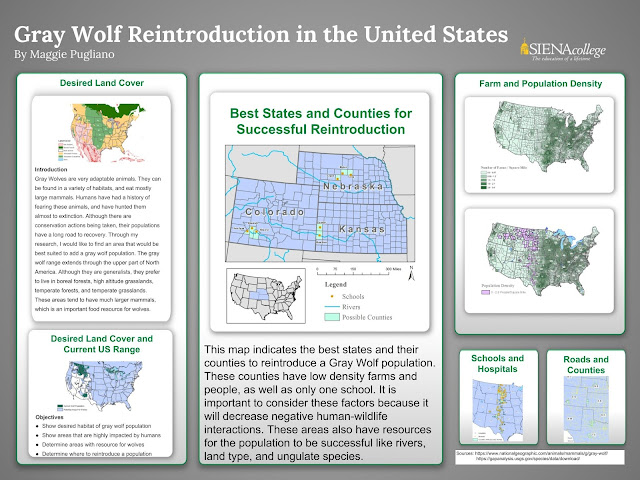
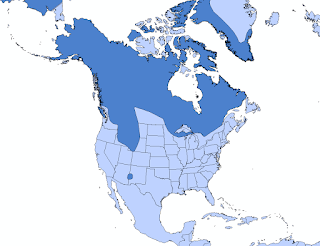
The Grey Wolf range extends through most of North America. In the United States, there are three main areas where there are these wolves. Area one includes Washington, Idaho, Montana, and Wyoming. Area two includes Minnesota, Missouri, and Wisconsin. The third area includes Arizona and New Mexico.  Grey Wolf Range Grey Wolf Range in the USA Because Grey Wolves are very adaptable animals, they can be found in a variety of habitats. Although they are generalist s,  they prefer to live in boreal forests, high altitude grasslands, temperate forests, and temperate grasslands. These areas tend to have much larger mammals, which is an important food resource for wolves. Preferred Grey Wolf Habitat Humans have had a history of fearing these animals, and have hunted them almost to extinction. Although there are conservation actions being taken in the three main areas I listed above, their populations have a long road to recovery. The goal of my...

Research Update

Image
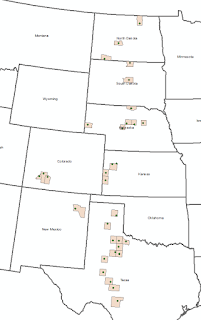
I have narrowed down my options to place the wolf population. I found the hospitals and schools in each county. Then I found which counties have only one school, to minimize negative human-wildlife interactions. While limiting the options, I noticed that many of the counties that I could place the wolf population are very far apart. I want to try to find counties that are close together that have limited people, so that there is not a negative reaction to the introduced wolf population. In North and South Dakota, the counties that I could place the wolves are very far apart, so I have decided to cut them from the list. Oklahoma is also off the list because the only county that was found in that state had too many schools in that area. My new criteria will include that at least two counties must be next to each other, in order for the wolf population to expand without negative human interactions.  After narrowing it down to potential counties, when I added roads, I notic...

Research Update

I am starting to eliminate states. I decided to not place the wolf population in CA because the single county they would have available is relativity small, and because there are not surrounding areas they could gather resources, they would have many interactions with people. These interactions could pose a threat to people. I also decided not to place a new population in ID, MT, MN, WY, OR or WI. These states already have a current wolf population, and the public may not like additional wolves in the area. Plus, too many predator species contained to one area would drastically effect hunting, which would also affect that stakeholder group. For now, although there were wolves reintroduced to NM, I will keep the counties that I could place the population because it is far away. The states I will look at more closely will be ND, SD, NB, CO, KS, OK, NM, and TX.